
Coconut Shell Charcoal Briquettes: A Buyer’s Guide to Specifications, Packaging and Performance
Coconut shell charcoal briquettes are often bought for their compact format, consistent presentation and suitability for a range of grilling and food-service uses. Yet the category is broader than a single cube in a photo. Shape, dimensions, density, ash, moisture, ventilation holes, packaging and intended appliance all influence whether a shipment works for a particular customer. The buyer’s task is to translate a use case into a product specification that can be sampled, approved and checked before dispatch.
This guide is for importers, distributors, private-label teams and hospitality buyers who want a more disciplined purchasing conversation. It does not promise a universal “best” briquette. Instead, it explains the questions that make a coconut-shell charcoal brief more reliable from the first sample through container loading.
Define the briquette format before discussing performance
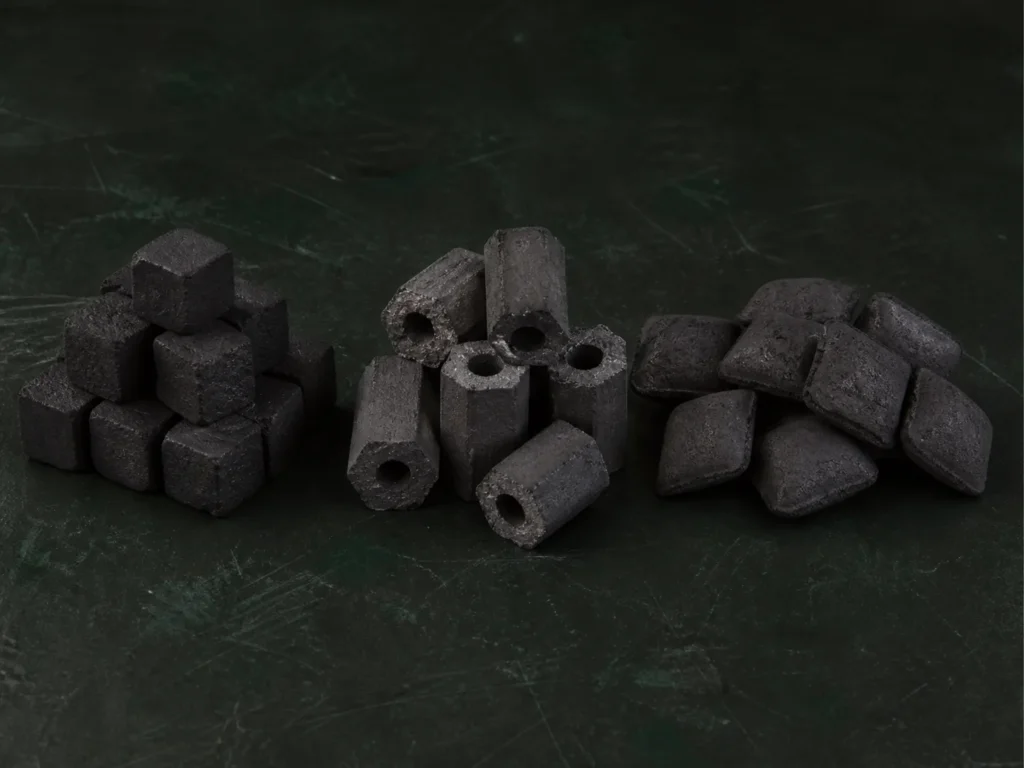
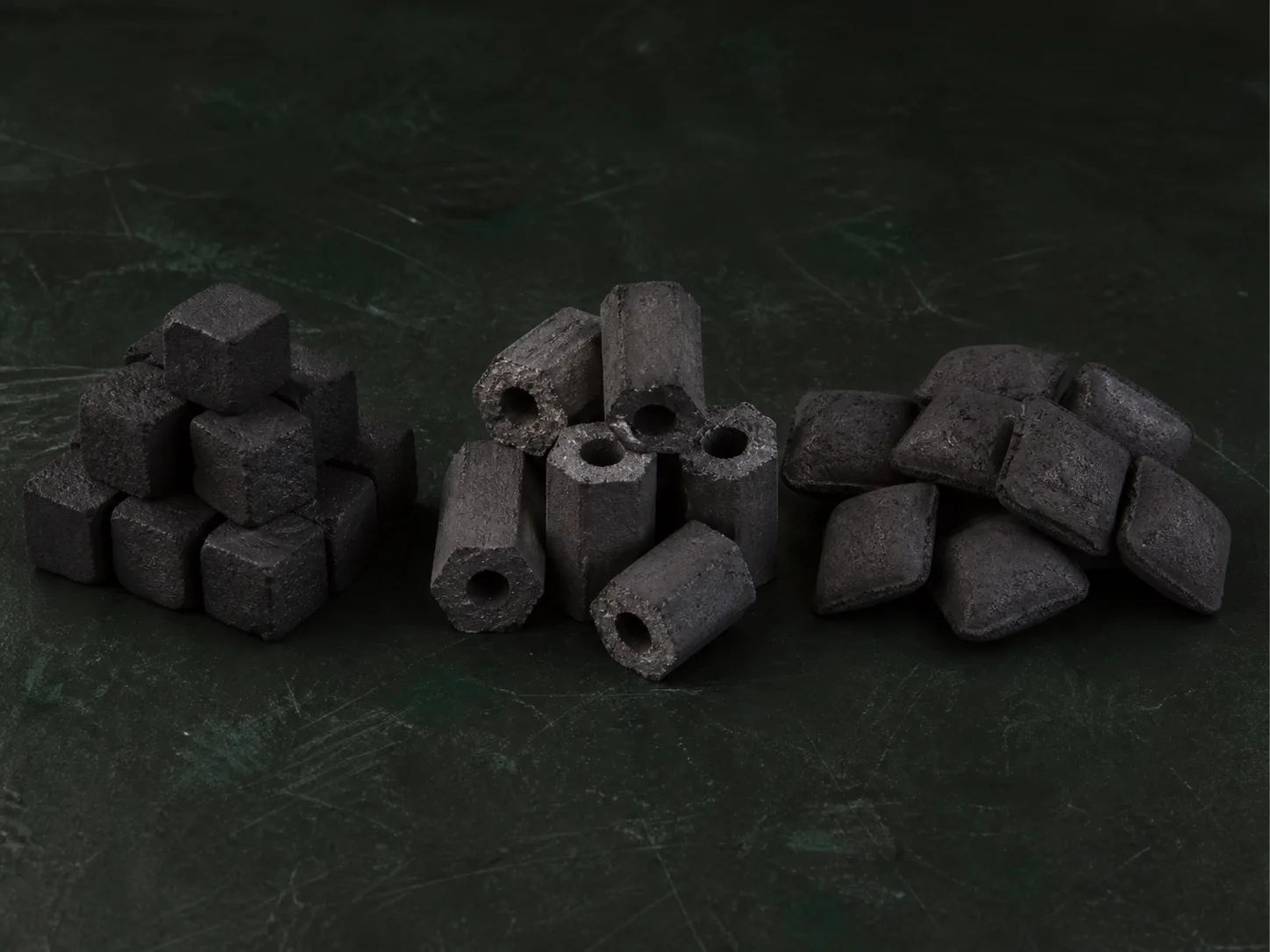
A coconut-shell briquette is a formed charcoal product, but its shape can vary substantially. Common commercial formats include cubes, pillows, discs and hexagonal logs with a central airflow hole. Each format changes how buyers pack the product, how users load an appliance and how pieces break during handling. A useful quotation names the format and gives its nominal dimensions or weight range instead of relying only on a product name.
Start with three practical decisions:
- Where will the briquettes be used? Restaurant kitchens, shisha programs, retail BBQ users and catering operations can require different formats.
- How will they be packed? A consumer-ready pouch, a master carton and a food-service bulk bag create different breakage and presentation requirements.
- What does the operator need to control? Ignition routine, refuelling interval, piece count and ash handling should be discussed in the context of the actual appliance.
These questions help avoid a common mistake: ordering a visually attractive format that is difficult to load, too fragile for the planned logistics route or inconsistent with the market’s retail expectations.
Ask for measurable product attributes
Most performance language becomes useful only when paired with a method. “Long-burning,” “low-smoke” and “low-ash” are not self-executing specifications. They can be part of an approved brief, but the buyer and supplier should decide what sample, test or observation will be used to evaluate the claim. Storage conditions, lighting material, airflow, weather, appliance design and the actual charcoal formulation can all affect the result.
| Attribute | Buyer question | Practical evidence |
|---|---|---|
| Shape and size | Will the piece fit the appliance and retail format? | Dimension range, individual-piece reference and photos beside a scale. |
| Breakage and fines | How much usable product remains after transport? | Sample screen or hand-sort method agreed before packing. |
| Moisture and ash | What quality limits matter to the program? | Declared method, representative sample and acceptance tolerance. |
| Ignition and service use | What lighting method and appliance are assumed? | Controlled demonstration or a buyer-side trial recorded with conditions. |
| Odour and additives | Are product claims appropriate for the target market? | Full, accurate product declaration and market-specific review. |
For a first order, request a sample from the intended format and pack configuration. A loose sample can show the basic shape, but it cannot fully represent the condition of pieces after bagging, cartoning and container movement. If the product will be sold under a private label, approve the actual bag material and outer carton as part of the sample process.
Understand the role of raw material and traceability
Coconut-shell charcoal is a biomass-based material, and buyers should be precise about how they describe it. A sourcing statement should identify the material category and the relevant controls without making unsupported environmental or certification claims. If a customer requires a traceability or forest-based certification statement for related packaging materials, documentation must match the claim. FSC explains that chain-of-custody systems identify and track eligible forest-based materials through manufacturing and distribution; the correct claim depends on the documented status, not on a generic green label.
For the charcoal itself, a buyer can ask for a simple raw-material statement, production-lot identification and records connecting the finished pack to its production run. That is often more useful operationally than an overbroad sustainability sentence. It helps the buyer distinguish product facts from market-facing claims and makes a later quality discussion easier to trace.
Packaging protects the product and the brand
Briquettes are regular in shape, but their edges can still chip if the pack design and handling route are not considered. Packaging should protect the product, communicate essential information and fit the planned retail or food-service channel. The same physical briquette may need different packs for a supermarket, a restaurant distributor and an export consolidator.
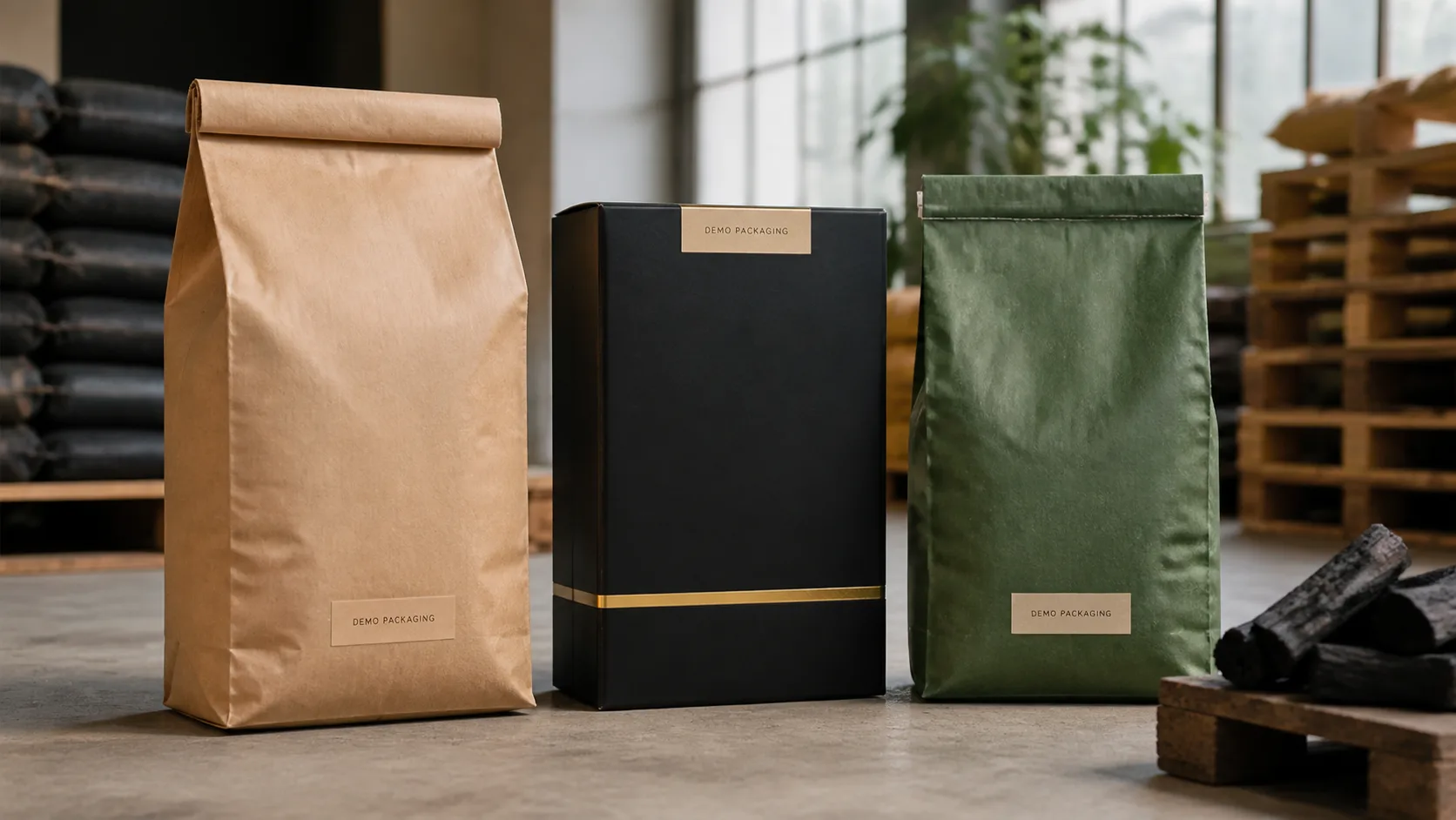
A clear packing brief covers:
- Net weight and expected tolerance under the applicable market rules.
- Inner bag material, closure and print artwork revision.
- Number of units per carton and carton dimensions.
- Lot code position, country-of-origin statement where required and handling marks.
- Pallet, container or floor-loading plan, including evidence required during loading.
Do not treat an artwork proof as a substitute for a compliance review. Claims such as natural, sustainable, odourless, food-safe or certified can carry different requirements in different markets. Confirm the final wording with the importer or local compliance adviser before mass printing. A careful supplier should be able to separate a demonstrated product fact from a buyer’s proposed marketing claim.
Set up a sample and lot-approval workflow
A repeatable workflow makes it easier to move from a promising sample to a purchase order. The workflow below is deliberately simple; it can be expanded for larger programs or third-party inspection requirements.
- Product brief: record format, use case, desired dimensions, pack format and the points that matter most to the end user.
- Sample review: inspect the pieces, packaging and declared data; record any requested adjustment.
- Artwork and pack approval: lock the print revision, language, net weight and carton configuration.
- Pre-shipment review: compare the lot against the approved reference and collect agreed photos or inspection records.
- Loading proof: capture count, container condition, packing arrangement and seal information as applicable.
💡 Practical tip: keep a small “golden sample” and photo record for each approved SKU. It gives both sides a reference when production, sales and receiving teams are separated by time zones.
Match the briquette to the channel
Retail buyers often prioritise consistent visual presentation, clear pack communication and convenient unit sizes. Food-service buyers may care more about carton efficiency, reliable handling and a format that staff can load quickly. Specialty users may have their own size and density preferences. One formulation or pack is not automatically appropriate for every channel.
Consider developing a channel matrix rather than requesting a single “universal” product:
- Retail BBQ: consumer-friendly net weight, clear lighting guidance and durable shelf presentation.
- Restaurant and catering: bulk efficiency, predictable handling and a pack that fits the operator’s storage routine.
- Private label: documented artwork approval, clear claim ownership and a repeatable outer-carton standard.
- Distributor program: SKU differentiation, pallet plan and an evidence trail for each shipment.
Primechar’s charcoal range separates coconut-shell charcoal from hardwood lump and sawdust briquettes. For buyers, that is a useful reminder to compare products by use case and measurable specification, not by a broad charcoal label alone.
Run a buyer-side use trial that produces useful notes
A buyer-side trial can add value, but only when it records the conditions. Avoid turning a short burn observation into an absolute product claim. Instead, use the trial to answer operational questions: did the format fit the appliance, was the pack convenient to open, how did the user load the pieces, was the ash routine acceptable, and would the staff choose the same format again? These observations can guide a purchase decision even when they are not formal laboratory measurements.
Set up the trial with a small, repeatable record. Identify the sample and its pack version, then note the appliance model or grill type, the lighting method, the loading quantity, ambient conditions if relevant and the type of service being simulated. Ask the operator to separate comments about the fuel from comments about the equipment or lighting process. This distinction prevents a buyer from rejecting a suitable briquette because a one-off trial used an unsuitable loading routine.
After the trial, write three outputs: what the team liked, what needs adjustment and what evidence is still missing. A request such as “make it burn longer” is less helpful than “test the next sample in the same appliance with the agreed cube size and record the load weight.” Similarly, “less dust” should become a defined breakage or fines check at the bag and carton level. The objective is to move from general feedback to a controlled next sample.
💡 Practical tip: include the purchasing and operations teams in the same trial review. Purchasing can check the commercial brief while operators assess handling. This prevents a format from being approved for price or appearance before the staff who will use it have given relevant feedback.
Common buying mistakes to avoid
The first mistake is selecting on a product image alone. The second is treating a broad phrase such as “premium cubes” as a full specification. The third is approving artwork after production has already started. Each problem is avoidable with an earlier, shorter conversation about dimensions, pack construction, acceptance evidence and responsibility for market claims.
Another mistake is to specify a technical limit without deciding how it will be sampled. A moisture or ash figure may be meaningful, but only if the parties agree on the test basis, lot sampling and tolerance. If the buyer does not need a particular laboratory result, do not add it simply because it sounds sophisticated. Focus on the characteristics that influence the customer’s actual use and commercial risk.
Finally, keep the product name and pack description stable across the quotation, pro forma invoice, artwork proof, packing list and loading evidence. A change from “coconut cube briquettes” to “BBQ briquettes” may seem harmless, but unclear naming makes it harder for teams to verify that the approved sample, printed bag and shipped SKU are the same program. A short SKU code and one approved commercial description solve this problem without making the documentation unnecessarily complicated. It also gives distributors a dependable reference when they receive, store and resell the goods across several locations.
Frequently asked questions
Are cube and hexagonal briquettes interchangeable?
Not always. They may suit different appliances, packing styles and user preferences. The appropriate format depends on the intended application, loading method and desired presentation.
What should a first sample include?
A useful first sample includes representative pieces, a basic product sheet, pack reference where available and clear notes on the proposed size range and quality controls. For private-label work, include an artwork proof before mass printing.
Can a buyer require zero breakage?
Zero breakage is rarely a practical transport specification. It is more useful to agree an acceptable fines or breakage limit, define how it will be checked and choose packaging designed for the logistics route.
Does a phytosanitary certificate automatically apply to charcoal?
Requirements depend on the destination, commodity classification and shipping materials. Buyers should confirm current import requirements with their local authorities or qualified broker; do not assume that a document required for one shipment applies to every charcoal product.
How should a buyer compare quotations?
Compare like-for-like briefs: format, net weight, pack count, raw-material description, quality limits, inspection plan, delivery terms and documentation. A lower unit price may not represent the same usable product or packaging standard.
Conclusion
A well-specified coconut-shell briquette program starts with the end use and records the details that affect it. Define the format, approve a representative sample and package, agree measurable quality controls, and document the lot before it leaves. This process is practical for a first import and becomes even more valuable as a private-label or distributor program scales. Good documentation does not make the product inflexible; it makes improvements easier to request, test and approve without losing track of the original commercial agreement. Keep the approved reference accessible to every receiving team.