
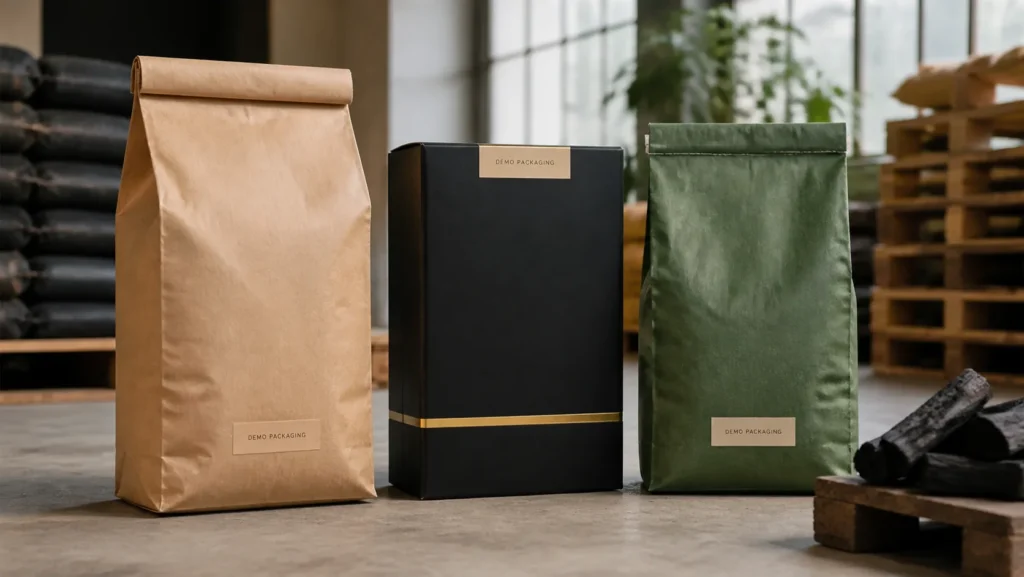
OEM Charcoal Packaging: A Practical Brief for Private-Label Buyers
Private-label charcoal packaging is where product decisions become visible to the customer. The bag and carton communicate a brand, but they also determine how the product is counted, protected, stored, identified and shipped. A good OEM brief therefore combines design information with operational detail: the charcoal SKU, net weight, bag construction, artwork version, outer-carton configuration, market-facing claims, lot identification and proof required before dispatch.
The strongest packaging programs are built before artwork is sent to print. They start by defining the buyer’s sales channel and the end user’s needs, then turn those decisions into an approval sequence. This guide explains how to create that sequence for charcoal products without relying on unsupported claims or vague packaging instructions.
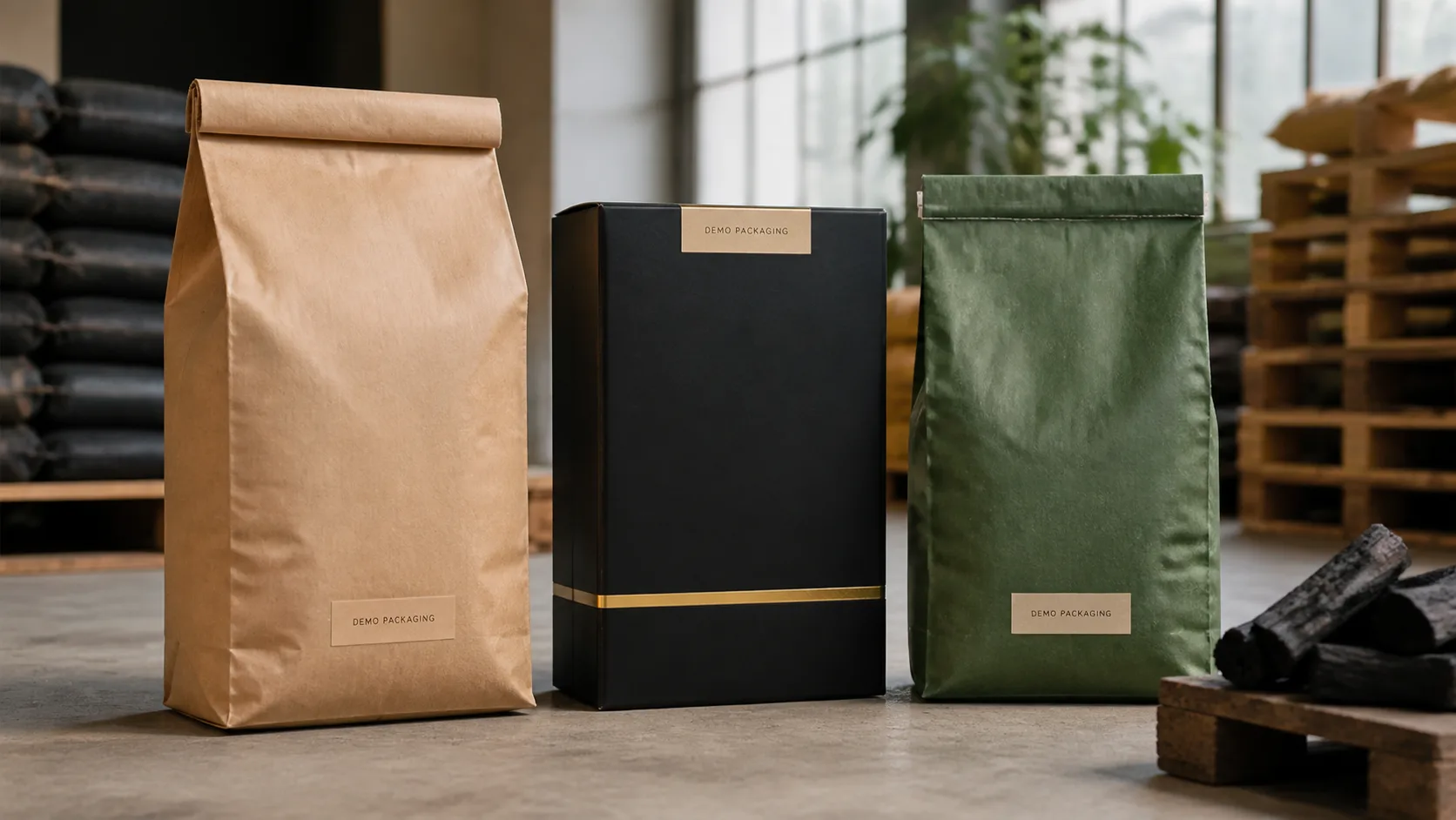
What an OEM charcoal brief should achieve
An OEM brief should let a production team make the right product without having to interpret a brand presentation. It should let a printer use the correct artwork revision. It should let a warehouse count cartons correctly. And it should let the buyer verify, before shipment, that the correct pack is being loaded. When one of these links is missing, a small packaging error can become an expensive international-shipping problem.
At minimum, the brief should answer these questions:
- Which charcoal SKU is going into the pack?
- What is the retail or food-service use of the finished pack?
- What net weight, language and required label information apply?
- What inner bag, closure, carton and pallet configuration has been approved?
- Which claims, marks or certification references are supported by evidence?
- Who approves the pre-production sample, final artwork and shipment evidence?
Keeping these answers in one controlled document reduces the risk that an old artwork file, a generic carton or an unapproved claim enters production. It also makes repeat orders easier because each new lot begins from an approved baseline rather than a memory of what was requested last time.
Separate brand design from product facts
Brand design can be expressive; product facts must be accurate. Treat them as two separate approval streams that meet only when both are ready. The creative stream covers colour, typography, logo placement, photography and shelf presence. The product stream covers product name, net weight, material description, required warnings, origin information where applicable, lot coding and approved certifications.
This distinction is particularly important for environmental and certification claims. A package should not use a certification mark, traceability statement or sustainability phrase simply because the buyer prefers the wording. For example, FSC states that chain-of-custody certification is the system used to identify and track eligible forest-based material through the supply chain. If an FSC claim is proposed for a forest-based packaging component, its wording and use must match the documented certification status and applicable trademark rules. Review the official FSC chain-of-custody guidance and obtain the appropriate approvals before printing.
Other terms also need a careful review. “Natural,” “smokeless,” “chemical-free,” “sustainable,” “premium” and “restaurant grade” can mean different things in different markets. A buyer may use a marketing descriptor when local rules permit it, but the supplier should not present an unverified claim as a technical fact. The practical rule is simple: if the claim cannot be tied to product evidence, certification evidence or the buyer’s approved market wording, leave it out of the production artwork.
Choose packaging from the inside out
Begin with the charcoal itself. Hardwood lump, coconut-shell cubes and extruded sawdust briquettes have different edges, piece counts and resistance to transport movement. A bag that suits one SKU may not protect another equally well. The same is true for the outer carton: its dimensions, board strength and internal packing arrangement should be designed around the product and the planned loading method.
| Packaging layer | Main decision | Buyer evidence to approve |
|---|---|---|
| Primary bag | Net weight, material, closure and print surface. | Physical mock-up, artwork proof and fill-weight reference. |
| Retail unit | How the customer handles and understands the product. | Front/back/side artwork and required label text. |
| Outer carton | Protection, count and distribution handling. | Carton dimensions, units per carton and shipping marks. |
| Pallet or floor load | Container utilisation and transit stability. | Loading sketch, count plan and photographs. |
A physical packaging trial is valuable even when the brand artwork is not final. It lets the buyer and supplier inspect how the product settles, whether the bag is easy to handle and how cartons stack. Once the format is agreed, the artwork can be applied to a known structure rather than being designed for a hypothetical bag.
Control artwork revisions
Artwork should be controlled like a technical drawing. Give every approved file a clear revision name, approval date and responsible contact. Define which elements may change without restarting the approval process—such as a barcode position or language correction—and which changes require a fresh proof. Product name, net weight, warning text, certification marks, legal statements and origin wording are usually high-control elements.
A simple artwork register can include:
- Brand and SKU name.
- File name, version and date.
- Approved markets and languages.
- Net weight and pack dimensions.
- Barcode or identifier supplied by the buyer.
- Claim, logo and certification approval notes.
- Named approver and written sign-off.
Do not rely on a chat screenshot as the sole record of approval. It may explain an intent, but it rarely identifies the exact print file or final dimensions. A formal approval sheet gives the printer, factory and buyer one shared reference.
Plan for the destination market
Import requirements, labelling rules and retail expectations vary by destination. The buyer or importer normally owns the final local-market compliance decision because they know the country-specific context, distribution channel and sales claims. The supplier can support that review by providing accurate product data, packaging dimensions, country-of-origin information, lot details and production documentation.
Wood packaging used to support or secure a shipment can add a separate compliance topic. The International Plant Protection Convention explains that ISPM 15 addresses phytosanitary measures for raw-wood packaging material used in international trade, including dunnage. It does not automatically describe every charcoal package, but it is relevant whenever pallets, crates or dunnage are part of the shipment. Check the destination’s requirements and the current IPPC ISPM resources before booking the load.

Turn packaging approval into a production workflow
Packaging becomes easier to manage when approval is sequenced. Start with the product brief; then confirm the pack structure; then approve artwork; then issue a pre-production sample; finally collect shipment evidence. The sequence prevents a familiar failure mode: printing a beautiful bag before the product weight, carton count or market wording is fully agreed.
- Discovery: define buyer, market, charcoal SKU, sales channel and target pack.
- Structural pack review: agree bag, carton, count and loading constraints.
- Artwork review: approve a controlled proof with all required text and codes.
- Pre-production sample: inspect a filled pack and carton, not only a flat print proof.
- Production release: issue the approved reference to all involved teams.
- Pre-shipment evidence: verify lot, count, packing appearance and loading sequence.
📌 Key point: the most useful approval is not the last email. It is the controlled pack reference that can be compared with the actual goods before container doors are closed.
Make logistics visible in the brief
Packaging design often stops at the outer carton, but export performance depends on what happens after that. Record the carton dimensions, gross weight, number of cartons, planned arrangement and the evidence expected from the loading team. If the cargo is floor-loaded, describe the stacking approach. If pallets are required, record pallet dimensions, treatment status where relevant and maximum stack height. If mixed SKUs are loaded, define how they will be separated and counted.
For a new buyer-supplier relationship, ask for a set of pre-shipment photographs: packaged product, carton marks, count in the staging area, container condition before loading, load progress and final seal where applicable. These images are not a substitute for inspection. They are a practical record that helps commercial teams review the handoff without asking a warehouse to reconstruct events after departure.
Primechar’s home page positions OEM packaging and container dispatch as part of the commercial process. That is the right mindset for private-label buyers: packaging is not an afterthought; it is a defined part of the product and shipment specification.
What to send with an OEM quotation request
A clear request for quotation saves time for both buyer and supplier. It does not need to contain every final marketing detail, but it should make the commercial path visible. Include the target market, intended sales channel, charcoal product type, anticipated volume, preferred net weight, bag format, outer-carton expectation, destination port or delivery basis, required timing and any known compliance constraints. If the buyer has a brand guide, share it as a separate reference rather than embedding partial logo files in an email thread.
For a private-label program, distinguish between information that is fixed and information that is exploratory. A fixed requirement might be a 5 kg retail pack or an approved barcode. An exploratory point might be whether a kraft-look bag or a printed carton is more appropriate for the chosen channel. Suppliers can respond more accurately when they know which decisions have already been made and which options they are expected to propose.
It is also useful to request a list of supplier questions rather than expecting a quotation to be complete on the first message. A disciplined supplier may need to confirm artwork ownership, carton strength, destination labelling, test requirements, loading method and document expectations before committing to a production plan. Those questions are a sign that the packaging program is being treated as a controlled deliverable.
📌 Useful RFQ attachments: brand guide, existing artwork if available, target dimensions, packing reference photos, market label requirements, expected annual volume, destination, and an approval contact list. Keep confidential brand files in a controlled channel and identify the current version clearly.
Private-label charcoal packaging checklist
- ✅ Confirm the charcoal SKU and intended channel before designing the bag.
- ✅ Approve bag structure, net weight, carton count and load configuration.
- ✅ Use a version-controlled artwork proof with named approval.
- ✅ Verify every certification or environmental claim before printing.
- ✅ Request a filled-pack and carton sample, not only a digital mock-up.
- ✅ Define loading photos, count records and seal evidence before the lot is packed.
Frequently asked questions
Who should approve private-label artwork?
The buyer should nominate one accountable approver for brand and market-facing content, while the supplier confirms that the approved file can be produced as specified. Legal or regulatory review may require input from the importer or local adviser.
Can a supplier use the buyer’s logo without a formal artwork proof?
It is safer not to. A formal proof identifies the correct version, dimensions, colours, required wording and approval date. It reduces disputes over which file was authorised.
What is the difference between a bag mock-up and a production sample?
A mock-up primarily shows visual design. A production sample shows how the actual product, bag, fill weight, closure and carton work together. Both are useful, but they answer different questions.
Are pallets always required for charcoal exports?
No. The right loading approach depends on the destination, shipping method, carton design, warehouse requirements and buyer preference. If raw-wood pallets or dunnage are used, check the relevant phytosanitary requirements for the route.
How can a buyer prevent an outdated artwork file from being used?
Use a revision register, identify the approved master file clearly and require written sign-off before production release. The supplier should archive superseded versions separately from active files.
Conclusion
OEM charcoal packaging succeeds when it is treated as a controlled product system. Define the charcoal, pack structure, artwork, claims, carton plan and loading evidence together. The result is more than a better-looking bag: it is a repeatable private-label program that is easier to produce, inspect and ship. A controlled process also gives the buyer freedom to develop future sizes, markets and campaigns from a proven operational base.